
One Donation, Many Roots Across Te Karamū
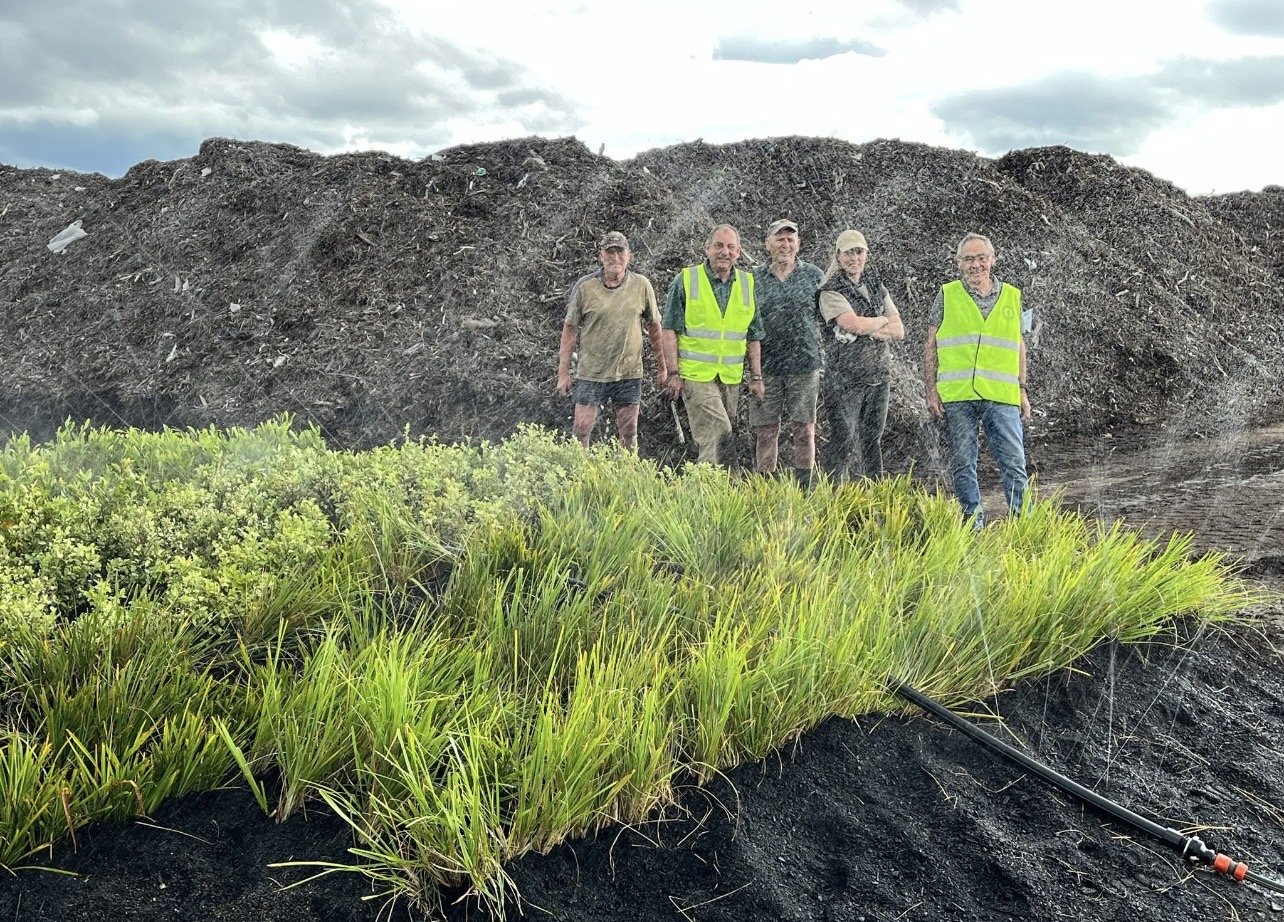
Biorich | Rotary Stortford Lodge rooted cutting nursery.
When you are a catchment group just getting started, building connections across a whole catchment can feel like a big task.
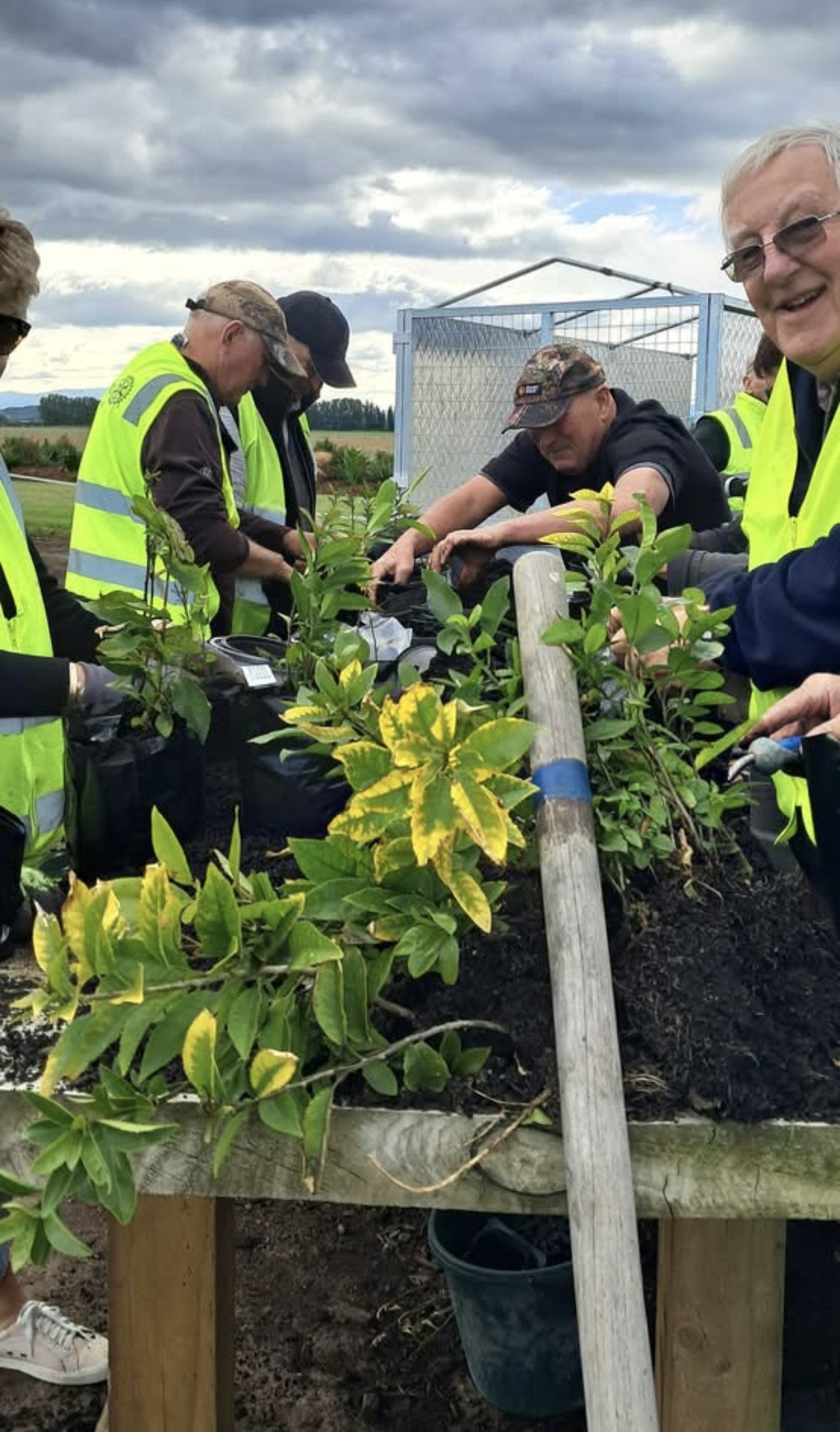
Rotary members potting riparian trees.
So when Brian McLay, through Rotary Stortford Lodge, and on our committee, sourced 2,500 end of season riparian plants for the Karamū River Catchment Collective, he had a vision. More than seeing them as 2,500 plants to enhance our catchment, he saw an opportunity to help us connect with landowners and Councils across Te Karamū and start growing something together.
The plants arrived at the end of the planting season, and thanks to our friends at Biorich, they were helped into the best compost in town and given a little more time to grow. Later in the season, a team of Rotary volunteers potted them up, and they grew well and developed healthy root systems.
By the time they were ready to go out, those 2,500 plants had become a generous donation. They also became a way to reach into six of our subcatchments, supporting water quality and biodiversity work across Paritua, Maraekakaho, Twyford, Havelock Streams, Kererū and Raukawa. They have been homed across 10 landowner sites as well as a Hastings District Council park.
That is what we love about this collective approach. A single contribution can become many small actions, spread across a catchment and taken forward by different people.
Riparian planting is one of those simple actions that can make a meaningful difference to the health of our waterways. Riparian zones are the strips of land alongside drains, streams, rivers and lakes. They can also include some of the wettest areas on farms, such as wetlands, springs, seeps and gullies. When these areas are fenced and planted, they can help protect waterways by slowing runoff and filtering sediment and nutrients before they reach the water. The vegetation also provides shade, habitat and food for native species, while strengthening the edges of waterways and helping landowners create more resilient landscapes.
The plants chosen for this project are a great example of how a mix of native species can bring different benefits.
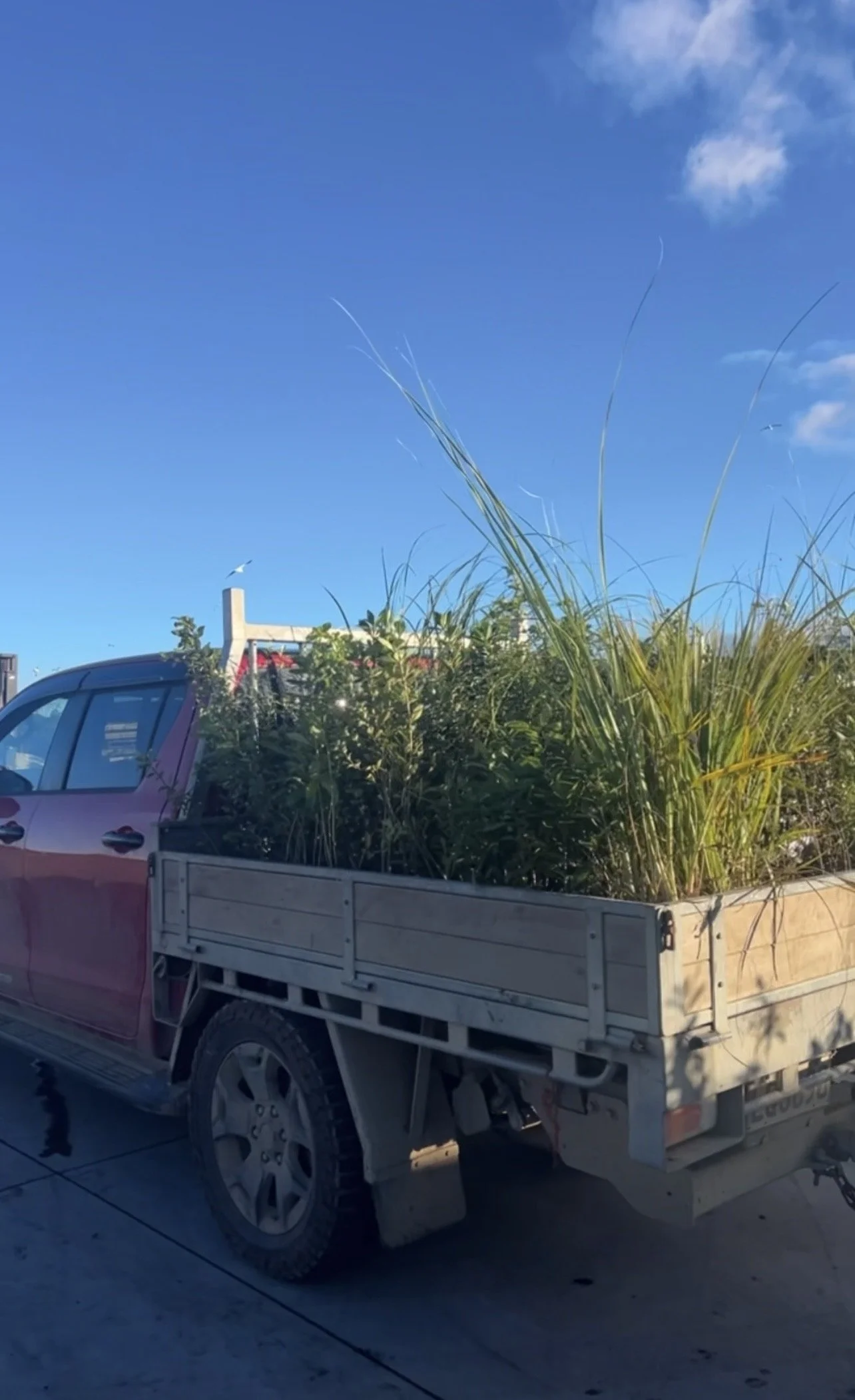
600 plants off to Kereru Station.
Māhoe provides dense vegetation and is well suited to damp areas, while tī kōuka, or cabbage trees, are a familiar and hardy part of the Aotearoa landscape, providing structure and habitat. Tī kōuka can also tolerate wetter conditions, making it useful around waterways and wet areas.
Karamū is a valuable native shrub for riparian planting, providing food and habitat for native birds, while kōhūhū creates dense cover and can help establish a strong vegetative layer. Akeake is another hardy native that can provide shelter and structure as plantings develop.
Toetoe adds height and texture, with its dense growth helping provide cover and habitat, while koromiko, or hebe, is a useful native shrub that can thrive in a range of conditions and provides flowers that support insects.
Together, these plants will grow into living buffers along waterways and wet areas. They will look different from site to site, but each contributes to the wider health and resilience of Te Karamū.
And that is the part that matters most.
Water moves from the property boundary into a broader interconnected subcatchment boundary. What happens upstream will influence what happens downstream, which means restoring the health of our waterways is something we can all contribute to. Enhancing and protecting our valuable water resources benefits everyone who depends on them, whether that is for drinking water, farming, recreation, biodiversity, cultural connections or simply enjoying the landscapes around us.
For the Karamū River Catchment Collective, these 2,500 plants have also helped us do something equally important: meet people, visit places and start building relationships across our subcatchments.
We are grateful to Brian McLay and Rotary for seeing the opportunity to help us get started, to our friends at Biorich for helping us bring the plants on, and to the volunteers and landowners who have helped get them where they need to be.
One donation. 2,500 plants. Six subcatchments. Ten landowners and a community park.
And now, thousands of roots are growing into the ground and becoming part of the future of Te Karamū.
